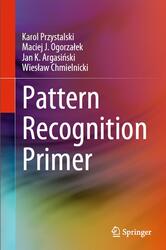
This book is suitable for wide range of data scientists, machine learning engineers, data analysts, academic teachers and especially for students. One of the advantages of this book is that the reader is able to get a detailed explanation of each commonly used classification method. Each method is presented in a easily to understand way by using simple comparison examples and additionally ready to use examples written in Python. Teachers can use it for their lectures/lessons and students to learn about clas-sification methods. Each exercise have a solution that is described in the appendix to the book. Additionally, ready to use examples written in Python are shown. Teachers can use it for their lectures/lessons and students to learn about classification methods.
Distance matrix between clusters.
We could stop here if we are fine with the number of clusters, but in most cases, we would like to proceed. Going back to step one of the method, we need to calculate the distance matrix again. The only question here is how to calculate the distance between a cluster that consists of one object and a cluster with more objects. There are methods to calculate the distances between clusters with any number of objects. Some of such methods are given in Table 3.5. The distances can be calculated as the minimum distance between two objects from each cluster. This method is called the single linkage method. The opposite is the maximum distance that is used in the complete linkage method. We also have an average distance measure, where we take the average distance between all objects. A similar one is based on the centroids, where the centroids are calculated as the average positions of all objects in a given cluster. Next, we calculate the distance between the centroids of both clusters. This method is implemented in Listing 3.14 as the simple one and is based on the knowledge from the previous chapter where centroids were used for the calculation of the membership matrix.
Contents.
1 Introduction to Pattern Recognition.
1.1 Frameworks and Libraries.
1.2 Terminology.
1.3 The Process.
1.4 Features.
1.5 Taxonomy.
1.6 Quality Metrics of Classification Methods.
1.6.1 Training Phase Challenges.
1.6.2 Data Sets Preparation Approaches.
1.6.3 Output Quality Metrics.
For Further Reading.
References.
2 Machine Learning Math Basics.
2.1 Statistics.
2.2 Probability Theory.
2.2.1 Combinatorics.
2.2.2 Conditional and Independent Probability.
2.3 Linear Algebra.
2.4 Differential Calculus.
2.4.1 Derivatives.
2.4.2 Gradients.
2.5 Fuzzy Logic.
2.6 Dissimilarity Measures.
For Further Reading.
References.
3 Unsupervised Learning.
3.1 Distributed Clustering.
3.1.1 K-Means.
3.1.2 Fuzzy C-Means.
3.1.3 Possibilistic C-Means.
3.2 Hierarchical Clustering.
3.2.1 Agglomerative Clustering.
3.2.2 Divisive Clustering.
3.3 Density Based Clustering.
3.3.1 DBScan.
3.3.2 Comparison to Hierarchical and Distributed Clustering.
3.4 Quality and Validation Methods in Unsupervised Learning.
3.4.1 Heterogeneity and Homogeneity.
3.4.2 Number of Clusters.
3.4.3 Internal and External Indices.
3.5 Image Segmentation.
3.5.1 Preprocessing.
3.5.2 Selecting the Number of Clusters.
3.5.3 Distributed Clustering-Based Segmentation.
3.5.4 Centroids in RGB Model.
For Further Reading.
References.
4 Introduction to Shallow Supervised Methods.
4.1 Fisher’s Classifier.
4.2 Nearest Neighborhood Classifiers.
4.3 Linear Regression.
4.4 Logistic Regression.
4.5 Naive Bayes Classifier.
For Further Reading.
References.
5 Decision Trees.
5.1 Introduction to Tree-Based Classification.
5.2 Tree Operations.
5.3 Impurity Measures.
5.3.1 Gini Index.
5.3.2 Entropy and Information Gain.
5.4 Binary Trees with Classification and Regression Trees Method.
5.5 Univariate Non-binary Trees with C4.5 Method.
5.6 Multivariate Decision Trees with OC1 Method.
5.7 Quality Metrics and Tree Pruning.
For Further Reading.
References.
6 Support Vector Machine.
6.1 Lagrangian Multipliers.
6.2 C-SVM.
6.3 nu-SVM.
6.4 Non-linearly Separable Problems.
6.5 Extensions.
For Further Reading.
References.
7 Ensemble Methods.
7.1 AdaBoost.
7.2 Bagging.
7.3 Stacking.
For Further Reading.
References.
8 Neural Networks.
8.1 Artificial Neurons.
8.2 Shallow Networks.
8.3 Learning Methods.
8.4 Training Algorithms.
8.5 Evaluation Metrics.
8.6 Deep Networks.
8.7 Deep Convolutional Neural Networks.
8.8 Recurrent Neural Networks.
8.9 Advanced Training Techniques.
8.10 Network Architectures.
For Further Reading.
References.
Afterword.
Appendix A: Exercises.
Appendix B: Environment Setup.
Бесплатно скачать электронную книгу в удобном формате, смотреть и читать:
Скачать книгу Pattern Recognition Primer, Przystalski K., Ogorzałek M.J., Argasiński J.K., 2026 - fileskachat.com, быстрое и бесплатное скачивание.
Скачать файл № 1 - pdf
Скачать файл № 2 - epub
Ниже можно купить эту книгу, если она есть в продаже, и похожие книги по лучшей цене со скидкой с доставкой по всей России.Купить книги
Скачать - epub - Яндекс.Диск.
Скачать - pdf - Яндекс.Диск.
Дата публикации:
Теги: учебник по программированию :: программирование :: Przystalski :: Ogorzałek :: Argasiński
Смотрите также учебники, книги и учебные материалы:


Следующие учебники и книги:
Предыдущие статьи: