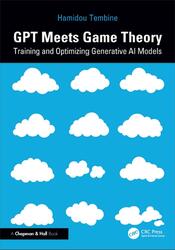
GPT Meets Game Theory offers an illuminating read for computer science, engineering, and mathematics researchers interested in the mathematical underpinnings of deep learning models, particularly transformers, and also for those who are curious about how game theory can apply to the training and optimisation of these models.
There is No Best Generative Machine Intelligence.
Transformers, diffusions, and other large learning models can be used to analyze blockchain tokens, cryptocurrencies and central bank digital currencies. These generative foundational machine intelligence models can look at past data (backcasting), current data (nowcasting) and estimate future trends (forecasting) of the financial technologies (FinTech) market. By doing this, they can help spot investment opportunities, track market movements and provide valuable insights. The results can be delivered through an easy-to-use dashboard, making it accessible for investors, traders, and Fintech professionals to make informed decisions. This dashboard could highlight key trends, risks, and opportunities in almost real-time, helping users stay ahead in the market. The precision of the output from generative machine intelligence displayed in a dashboard is crucial because it directly affects the quality of the decisions users make. Inaccurate or imprecise insights can lead to poor investment choices, misinterpreting market trends, or overlooking key threads and opportunities. For investors, traders, and Fintech professionals, even small errors in machine intelligence-generated forecasts or recommendations can result in significant financial losses. Therefore, ensuring high precision not only builds trust in the machine intelligence system but also helps users confidently rely on it for accurate, actionable insights that support smarter decision-making.
Let us start with the case of backcasting. FinTech has generated vast amounts of online data, particularly in the blockchain space. The dashboard should be tested on this historical data. If the model does not perform well on past data generated by FinTech, it is unlikely that it will be trusted for identifying future opportunities. That is why backcasting is a critical first step. It is also worth noting that this is easily verifiable because the data already exists, and there is no need for a prediction window to assess its performance ex-post.
Contents.
Preface.
About the Author.
Symbols.
Introduction.
1. Deep Learning Meets Game Theory.
1.1. Deep Learning Architectures.
1.2. Averaged Non-Expansive Activation Functions.
1.2.1. From Averaged to Monotone Operators.
1.2.2. Fixed-Points of Activation Functions.
1.3. Maximally Cyclically Monotone Activation Operators.
1.4. Deep Learning Outcomes as Games.
1.4.1. One-Shot Games.
1.4.2. Single Leader - Single Follower.
1.4.3. Other Notions of Stackclbcrg Solution.
1.4.4. Multi-Layer Hierarchical Games.
1.4.5. Any Neural Network is a Hierarchical Game.
1.4.6. Hierarchical Games with Averaged NonExpansive Activations.
1.4.7. Hierarchical Games with Maximally Cyclically Monotone Activations.
1.5. Training in Deep Learning Architectures as Games.
1.5.1. Training under Averaged Nonexpansive Activations.
1.5.2. Training under Maximally Cyclically Monotone Activations.
1.6. Be Careful about the Minimization Formulation.
1.6.1. Do Not Work With Gradient of Activation Functions.
1.6.2. Work With Anti-Derivative of Activations.
1.6.3. Beyond Gradient Descent of Anti-Derivatives: Bregman Training.
1.7. Deep Neural Network Examples.
2. Mathematics of Transformers.
2.1. Transformer.
2.2. Boltzmann-Gibbs Transformer.
2.2.1. Layer Operator of the Generative Pre-Trained Transformer.
2.2.2. Layer Normalization Issue.
2.3. Transformer-based Tensor-Graph Neural Networks.
2.3.1. Properties of the Normalization.
2.3.2. Properties of the Attention Operator.
2.3.3. Properties of the Tensor-Graph Feedforward.
2.3.4. Attention as a Partial Anti-Derivative.
2.3.5. Properties of the Tensor-Graph Aggregation.
2.3.5 PropertiesoftheTensor-GraphAggregation.
2.4. Analysis of the Fixed Size Transformer.
2.4.1. Transformer-based Tensor-Graph Outcomes.
2.4.2. Transformer-based Tensor-Graph as an Hierarchical Aggregative Game.
2.4.3. Training Problem.
2.5. Small Learning Rate Regime of Finite Sequence Transformer.
2.6 Transformer with a Simpler Normalization.
2.6.1. Boltzmann-Gibbs Transformer with a Simpler Normalization.
2.6.2. Sigmoid Transformer with a Simpler Normalization.
2.7. Mixture-of-Experts Transformers.
2.8. Difference Transformer.
2.8.1. Difference BG Transformer.
2.8.2. Difference Sigmoid Transformer.
2.8.3. Sigmoid Transformer with Mixture-of-Heads and Mixture-of-Experts.
2.9. There is No Best Generative Machine Intelligence.
2.9.1. Point Forecasting.
2.9.2. Doing Better Than the Existing Best Generative Intelligence.
2.10. Constant Weight, Bias are Suboptimal.
2.11. Notes.
3. Extremely Large Transformers.
3.1. Mean-Field Limit Transformer.
3.1.1. Extremely Large Data and Asymptotics.
3.1.2. Mean-Field Limit Boltzmann-Gibbs Transformer with a Simpler Normalization.
3.1.3. Mean-Field Limit Sigmoid Transformer with a Simpler Normalization.
3.1.4. Mean-Field Limit Transformer.
3.2. Small Learning Rate Regime of Mean-Field Limit Transformer.
3.3. Mean-Field Convergence.
3.3.1. Indistinguishability.
3.3.2. State-Action A:-wise Indistinguishability.
4. Mean-Field-Type Transformers.
4.1. Self-and-Mean-Field Type.
4.1.1. Mean-Field-Type Self-Attention Mechanisms.
4.1.2. Properties of Mean-Field-Type Self-Attention.
4.2. Some Implemented Mean-Field-Type Transformers.
4.2.1. Mean-Field-Type Boltzmann-Gibbs Transformer.
4.2.2. Mean-Field-Type Sigmoid Transformer.
4.2.3. Mixture of Experts - Mean-Field-Type Boltzmann-Gibbs Transformer.
4.2.4. Mixture of Experts - Mean-Field-Type Sigmoid Transformer.
4.2.5. Mean-Field-Type Transformer with Difference Attention.
4.2.6. Mean-Field-Type Transformer with HoloNorm.
4.2.7. Mean-Field-Type Boltzmann-Gibbs Transformer with Mixture-of-Heads.
4.2.8. Mean-Field-Type Sigmoid Transformer with Mixture-of-Heads.
4.2.9. Mean-Field-Type Sigmoid Transformer with Mixture-of-Heads and Mixture-of-Experts.
4.3. Outcomes of Mean-Field-Type Transformer.
4.3.1. One-Shot MFTG.
4.3.2. A Mean-Field-Type Transformer is a Mean-Field-Type Game.
4.3.3. How to Compute the Mean-Field-Type Terms.
4.4. Training of Mean-Field-Type Transformers.
4.5. Small Learning Rate Regime of MFTT.
4.6 Mean-Field-Type Diffusion-Transformer.
4.6.1 Density-based System.
4.6.2. Explicit Solutions to Diffusion Systems.
4.6.3. Diffusion-Transformer.
4.6.4. Mean-Field-Type Diffusion-Transformer.
4.6.5. Training Mean-Field-Type Diffusion Tensor-Graph Transformer.
4.7. Mean-Field-Type Federated Transformers.
4.7.1. Federated Training in Tensor-Graph Transformer.
4.7.2. Mean-Field-Type Federated Transformers.
4.8. Unlearning in Mean-Field-Type Transformers.
4.9. Mean-Field-Type Federated Unlearning or Untraining.
4.10. On the Suboptimality of Constant Parameters in Mean-Field-Type Transformers.
4.11. Post-Training Without Re-Training.
5. Mean-Field-Type Learning.
5.1. Failure of Adaptive Moment Estimation.
5.2. Mean-Field-Type Learning is Exactly What You Need.
5.2.1. Boltzmann-Gibbs is Concentrated Only at the Global Minimizers.
5.2.2. Building a Mean-Field-Type Learning Algorithm.
5.2.3. Sample Tests.
6. Strategic Deep Learning.
6.1. Multiple Machine Intelligence Agents.
6.1.1. Architecture Selection.
6.1.2. Decision-Maker’s Neural Network Architecture.
6.1.3. Shared Neural Network Architecture.
6.2. TGN Strategic Learning.
6.3. MFTGs between Machine Intelligence Agents.
6.4. Building a Multi-Agent Mean-Field-Type Learning Algorithm.
6.4.1. Individual Mean-Field-Type Learning.
6.4.2. Collective Mean-Field-Type Learning.
6.5. Agentic Machine Intelligence.
6.5.1. Co-Intelligence Between a (Human) User and a MI-Agent.
6.5.2. Solution Concepts.
6.5.3. One (Human) User and Multiple MI-Agents.
6.5.4. Multi-(Human) User Multi-MI-Agent Game (MUMA Game).
6.5.5. MFTG for Agentic MI.
6.6. Notes.
Conclusion.
Bibliography.
Index.
Бесплатно скачать электронную книгу в удобном формате, смотреть и читать:
Скачать книгу GPT Meets Game Theory, Training and Optimizing Generative AI Models, Tembine H., 2026 - fileskachat.com, быстрое и бесплатное скачивание.
Скачать pdf
Ниже можно купить эту книгу, если она есть в продаже, и похожие книги по лучшей цене со скидкой с доставкой по всей России.Купить книги
Скачать - pdf - Яндекс.Диск.
Дата публикации:
Теги: учебник по информатике :: информатика :: компьютеры :: Tembine
Смотрите также учебники, книги и учебные материалы:


Следующие учебники и книги:


Предыдущие статьи: